
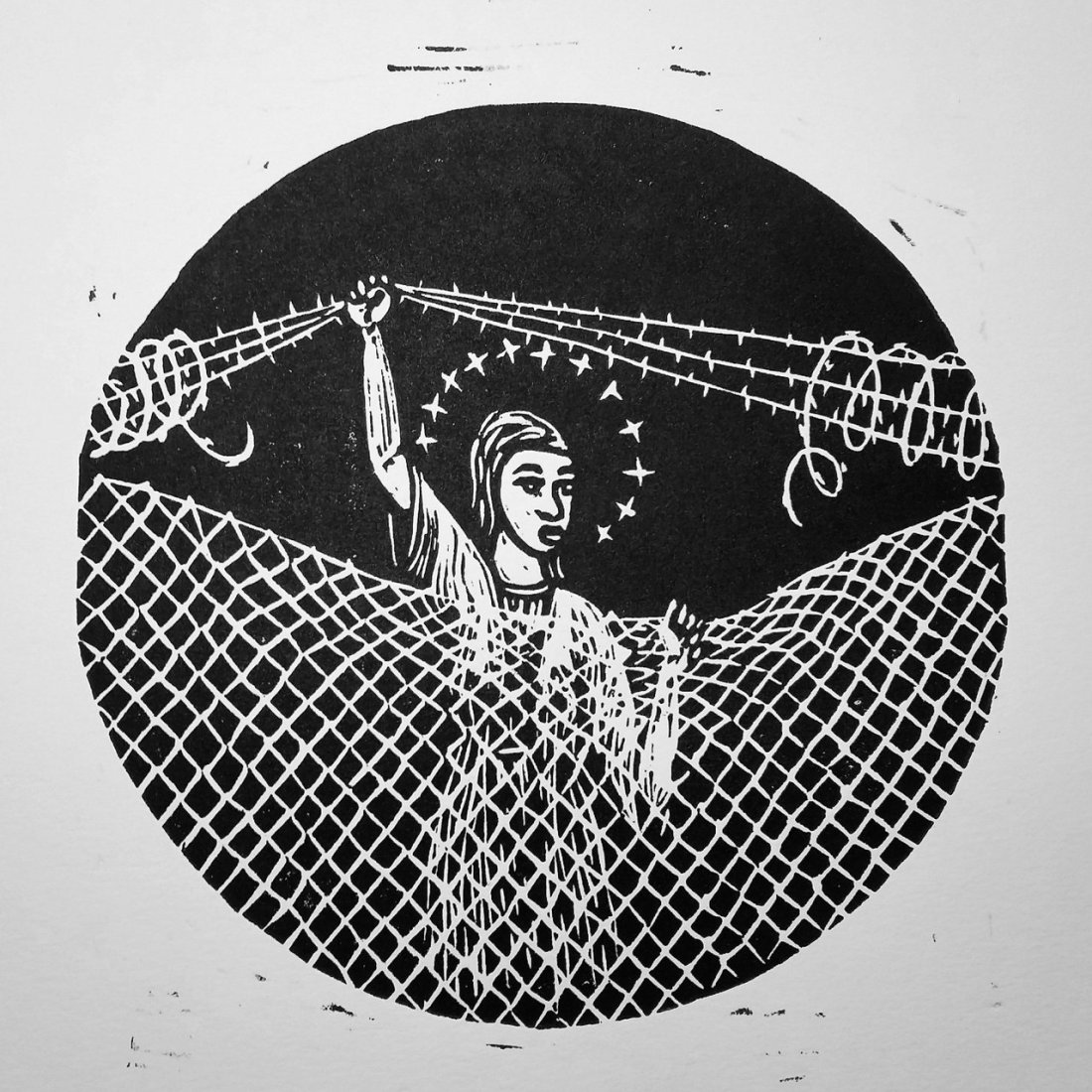
A piece just finished. Hail Mary. Advent 2018
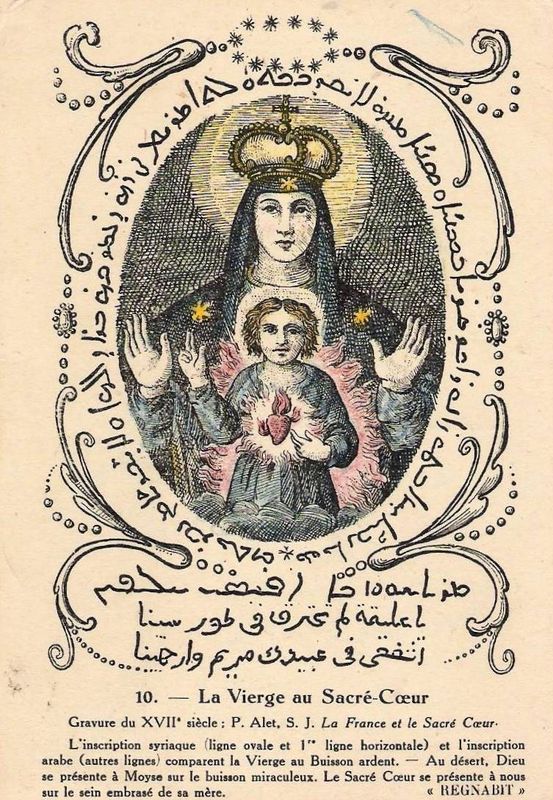
An engraving of Mary and Jesus revealing His Sacred Heart. The text in Assyrian and Arabic compares Mary to the burning bush from the Old Testament book Exodus.

At the entrance to the Loreto Chapel in Santa Fe, New Mexico, people have hung rosaries on a blossoming plum tree.
having some very heretical Mary thoughts tonight
she’s not… meek or sweet. the queen of martyrs is a mother in a blood-soaked battle frenzy
oh definitely. the Magnificat always seems explicitly martial to me. when I first encountered it, it was in the context of its adaptation in the “Canticle of Turning,” and as I was singing it, it was impossible not to be whipped up into this vicious soprano “frenzy”—that’s a perfect word—at the thought of empires toppling and divine retribution
i feel like when people see her obedience, they tend to see it as synonymous with “meek and sweet” feminine submission, and totally overlook the amount of sheer, overwhelming relish she takes in being an agent of God’s will. not only that, but she sees the impact—the punishing, world-shattering impact of a God with no regard for human social schemes—that her role as theotokos will have on the history of the world to come, and delights in it. it’s frightening and beautiful
Oh, Mary is meek all right – but in the way connoted by the Greek term in scripture, which the English fails utterly to convey. In the powerful way, not in the “you’re a woman so we compliment you when you let us walk all over you” way.
My pastor gave a sermon on gentleness/meekness last week, and discussed the Greek word πρᾳΰτης (prautēs). There is no perfect way to translate this word into English, and that’s why translators’ attempts with “meekness” and “gentleness” sound so wishy-washy.
What this word in Greek means is gentle-force, or power with reserve. It’s when someone with power (usually God!) chooses to control that power so as to protect others from it. You can’t have prautēs that is all gentleness and no might.
This webpage puts it this way: “Biblical meekness is not weakness but rather refers to exercising God’s strength under [God’s] control – i.e. demonstrating power without undue harshness.”
Mary demonstrates divine prautēs in everything she does. She has the favor of God but she does not use it to cause harm; she holds God in her womb and then in her arms and she raises him with songs of justice and stories of the crushed overthrowing the powerful.
She nudges Jesus into finally starting his ministry, and throughout it he practices the prautēs he learned from his mother – he may have the power of the entire universe under his control, but he remembers to cradle children gently, not to play to roughly with them; to rein in his frustration with his disciples so as not to crush him under his wrath; to be gentle and hold his power in reserve up until the time comes to shout no! people are suffering! and to overturn tables and wield whips against the corrupt.
Her canticle of praise does indeed reveal the relish @grunge-nun so poetically describes Mary feeling over her role as God-bearer. She foresees a world turned upside down by her newly-conceived child, where the mighty are scattered and the rich stripped of their treasures. This is a woman who loved justice as deeply as she loved mercy, and it pains me that even those who revere her (myself included) too often forget that.
ONE MORE TIME FOR THE PEOPLE IN THE BACK!!!!!!
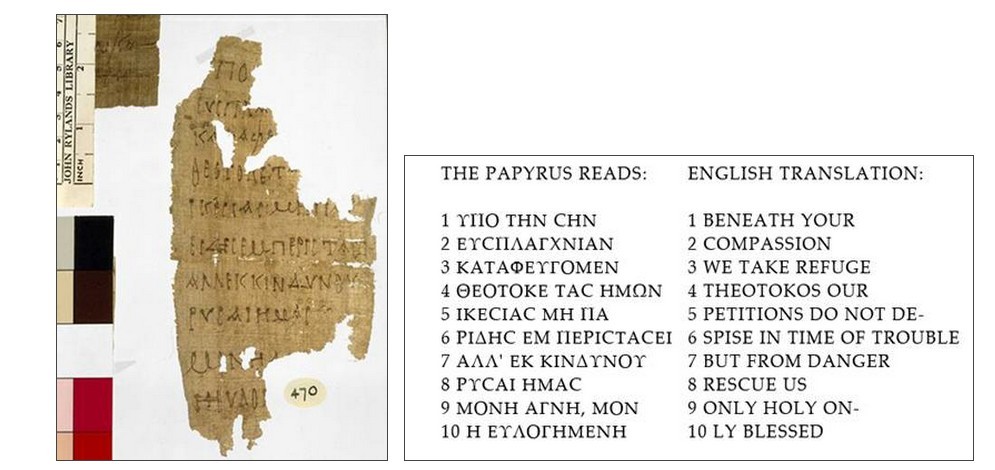
The earliest known prayer to the Theotokos
The early date of this prayer is important for a number of reasons, one of which is that it supports our understanding that the termTheotokos was not just a theological concept defended at the Third Ecumenical Council in AD 431, but was already in popular use and well-known several centuries before the Nestorian heresy. As St. Gregory of Nazianzus stated in AD 379, “If someone does not uphold that the holy Mary is Theotokos, he is separated from divinity.” (Letter 101, PG 37, 177C) Early Christians recognized the Theotokos as a powerful intercessor for those who are suffering and in need of protection. Christians have been seeking her intercessions from the time of the ancient Church and well over a thousand years up to this very day.

Mary, Conceived Without White Supremacy, 2017
I love this tshirt ❤
Ok but where do I get this as a shirt?
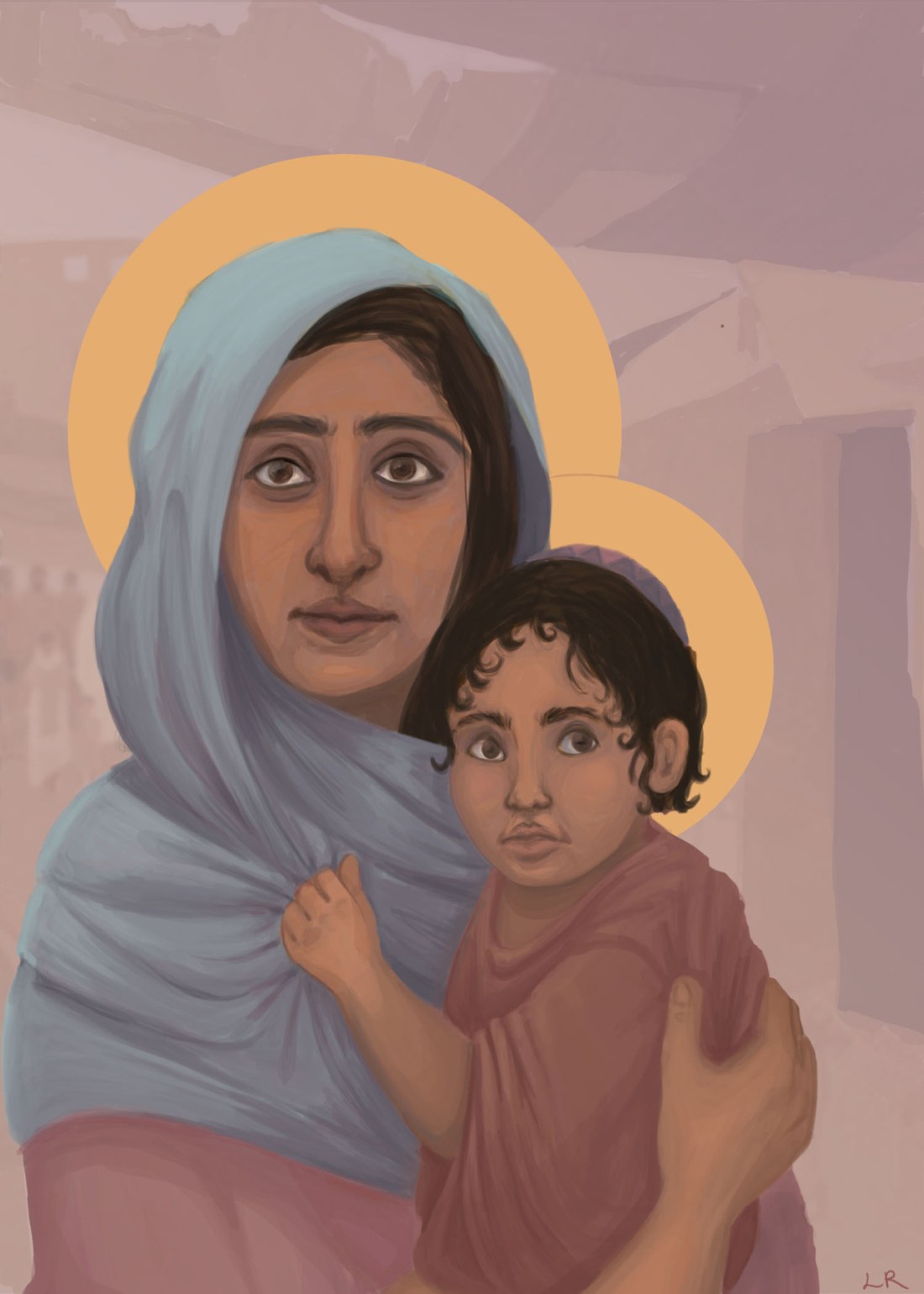
Refugee and Child
Now when they had departed, behold, an angel of the Lord appeared to Joseph in a dream, saying, “Arise, take the young Child and His mother, flee to Egypt, and stay there until I bring you word; for Herod will seek the young Child to destroy Him.”
When he arose, he took the young Child and His mother by night and departed for Egypt, and was there until the death of Herod, that it might be fulfilled which was spoken by the Lord through the prophet, saying, “Out of Egypt I called My Son.”
Matthew 2:13-15
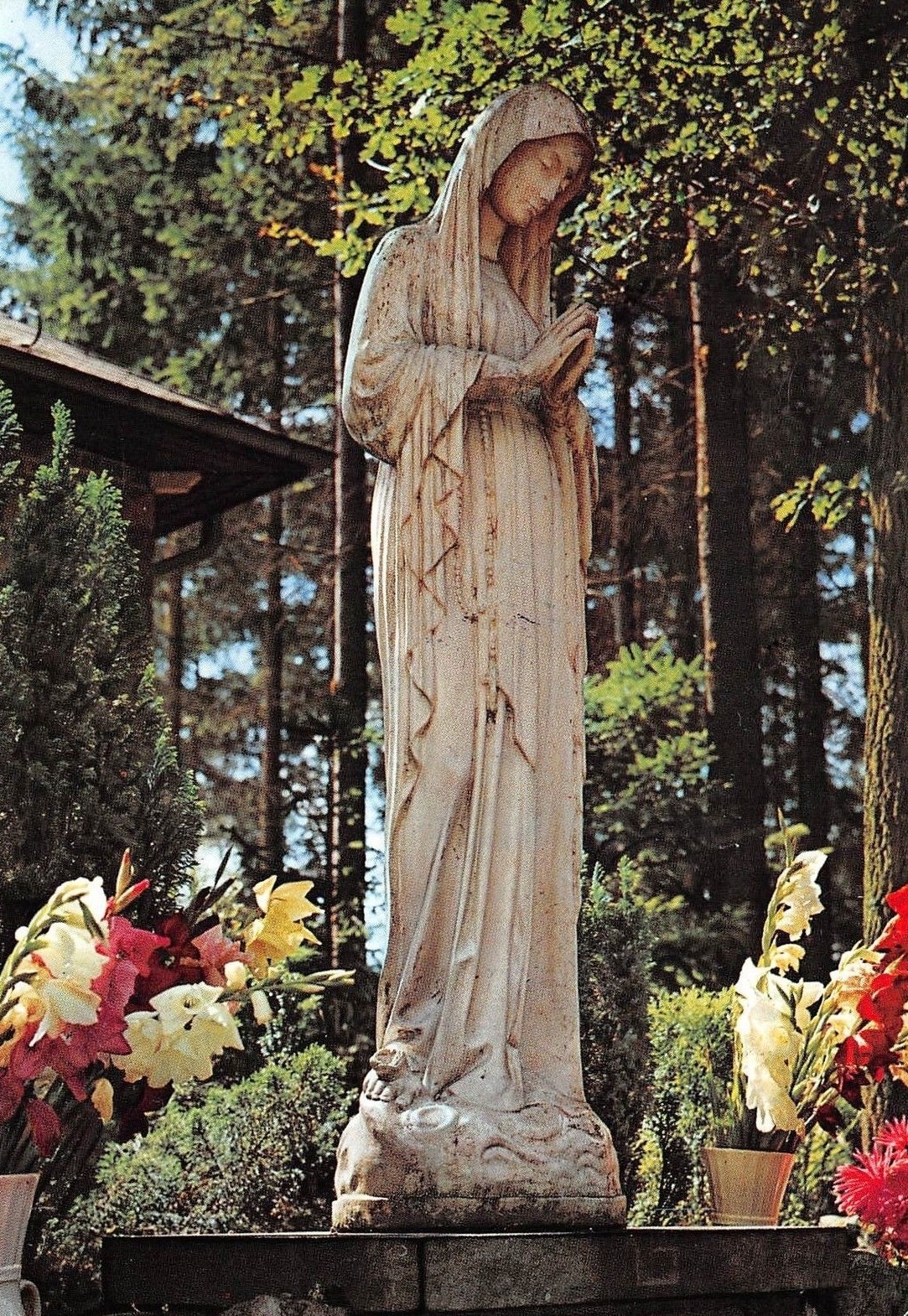
Notre-Dame de Banneux, la Vierge des Pauvres
The statue of Our Lady of Banneux, Virgin of the Poor in Banneux, Belgium.

 bennu rising