Matthew 11:19 is literally my favorite: “The Son of Man came eating and drinking, and they say, ‘Here is a glutton and a drunkard, a friend of tax collectors and sinners.’ But wisdom is proved right by her deeds.”
i love how my savior was always wasted and munching on something. Big Mood.
Okay so I was reading Genesis 1-3 today trying to study what the Bible says about Gender and I found something interesting. In Gen. 1 God makes Man(Gender neutral/mortal) and makes them (they/them)male and female. But only in Chpt. 2 does God make the first female. So did God make Adam’s soul both male and female? To go even further, does this mean all our souls are either both genders or have no genders? If this is true then it would completely explain people having different genders, because they would be feeling the gender of their soul rather than their biological one.
This could mean that while we have gender roles set up on us from the fall that are biology specific, we are still different genders in our soul.
What do you think? Am I reading too much into it or missing something?
I think that’s definitely a possibility! The website Hope Remains goes into that, too, saying that both Adam and Eve were gender neutral while inside the Garden because it was only outside that they needed a physical reproductive system/to be biologically different. So I think there’s definitely something to that!
–Admin Emily
It’s basically Gen 1-3 and more specifically Gen 1:27 that brought me to the realisation that I’m genderqueer. It was the earth shattering realisation that “male *and* female he created them” (Gen 1:27) could be read that humanity as a whole was created a mixture of male and female and that the infinite variety that God loves was in that. I realised that God could love me with a gender identity that lay outside the binary, in fact that it’s possible that this was part of God’s original plan for humanity. You *can* even go one step further and suggest that the whole Gen 2-3 Fall Narrative actually explains that gender is a result of or the cause of sin. It is only after the fall that gender becomes concrete.
Oooh I love where this is going! but I’m going to throw the original Hebrew text into the conversation to help clarify and enrich it.
Then, as the second half of this post, I want to add a little more about how I interpret gender in Genesis 2 – so if you want to skip the linguistics, read the summary paragraph below and then skip to the paragraph that begins “As a sort of summary” near the end in bold. You could also skim while focusing on the parts in bold if you don’t have time to read the whole post.
As a summary of what the Hebrew will reveal: those verses in Genesis 1 are not talking about Adam alone – they’re about the whole of humanity, or all of the first humans. Genesis 1 and 2 are actually two separate stories – offering us two versions of Creation. Genesis 1 is a broader picture of how God made all of Creation, and so the making of humanity in this version is just a short overview. Genesis 2 “rewinds” in order to narrow the scope and focus on the making of humans, and so we get more details to the story. (For more on the differences between chapters 1 and 2, see this webpage.) Thus, when Genesis 1 talks about God creating “man” in God’s own image (and the following paragraphs are going to critique that translation “man”), it’s talking not just about Adam but about all of the first of humanity – or, to relate it to Genesis 2, to Adam and Eve.
Some of this discussion is going to get a little linguistic-y and grammatical, so if there’s a part you don’t understand, don’t freak out! I’ve done my best to be as clear as possible, but feel free to ask questions, or to simply shrug and move past particularly confusing sentences; even without some of the details, you should get the big picture.
Let’s dive in.
I recommend pulling up this webpage, which is an interlinear version of Genesis 1, to look at while reading this info on the Hebrew. The main verses relevant to this discussion are Genesis 1:26-28, so scroll the page down to there. An interlinear text lines up the original Hebrew with a (very literal, basic) English translation, word for word. Note that you have to read the English lines from right to left, as that’s the order Hebrew goes in! It also follows the Hebrew word order, so you have to sort of flip flop some of the English for it to make sense.
I am going to go verse by verse, pointing out the words that are important to the conversation and that may not always be translated clearly from the Hebrew into English.
Verse 26: “And God said, let us make adam in our image, according to our likeness; and let them have dominion over the fish of the sea and over the birds of the air…(etc.)”
First off, let me clarify the Hebrew word adam before translating it into English. Here, it is not talking about the first man whose story is told in Genesis 2 whose name is Adam – while this word can indeed be a name, it is more often used as a common noun in Hebrew for humans in general. (On a complete tangent, if you’re curious, here’s a post I wrote months ago that discusses the differences between the word adam and the word ish, which is the word for “man” specifically.)
adam – as OP notes, the word used here is indeed gender neutral in the original Hebrew, despite often being translated into English as “man.” Clines’ dictionary defines adam as being able to be a collective noun (basically, a noun that “looks” singular but represents a plural group, such as the word “class,” which is a singular word representing a group of students) or a singular noun. Here is its definition of this word: – “1. humanity, human beings, people, persons in general (without regard to sex); human race as a whole.” – “2. individual, human being, person, whether a particular person or a typical human.” So here in verse 26, when God makes adam in God’s image, is adam one human being (no gender specified) or humanity as a whole? I would say the second option – this verse is saying that God makes the whole human race in God’s image.
“…let them have dominion…” – this phrase is in the Hebrew one word, a verb – one that has a plural ending on it. This is not being used as a singular indefinite pronoun the way “they/them” can be used in English, because that cannot be done with this Hebrew construction – it is indeed referring to multiple people. So, combined with adam, we can surmise that “let them have dominion” means “let all human beings have dominion.”
Verse 27: “And God created the human race in his own image; in the image of God he created them; male and female he created them.”
Here is where stuff gets good.
You will notice that in my above English translation, them occurs twice – but in the actual Hebrew, there are two different pronouns being used.
“in the image of God he created them” – here the pronoun is in the masculine singular, and is usually translated “him” or “it,” as it is used to refer to male individuals as well as nouns that are masculine (Hebrew has gendered nouns the way, say, Spanish does). In this verse, the masculine singular is referring to “the human race,” as adam as a noun is technically masculine (the “default” gender of Hebrew), even though it refers to people in a gender non-specific way, if that makes sense. So in some translations you’ll see it translated “he created him” to be true to the singular-ness of the Hebrew pronoun – but that causes confusion, making the reader think the verse is about one man, rather than the human race.
“male and female he created them” – here the pronoun is indeed the masculine (or default; it can encompass individuals of any gender) plural. Like the phrase “let them have dominion” in verse 26, this use of the plural pronoun clarifies that the adam God is making in God’s image is indeed plural – not just one human but humanity.
“male and female he created them” – oh no, you might be thinking, if this passage is thus about all humanity and not just Adam, does that mean that God makes all humanity male and female – i.e., with no possibility of humans being non-binary genders? Indeed, this verse is all too often used against nonbinary folks (and trans folks in general) in this way. But fear not.
People have written about how this and is “not a binary and” – just as God creating the heavens and the earth encompasses all that is in them, so God creating humans male and female encompasses the rest of the gender spectrum – see this short post, as well as this video by Austen Hartke for a more in-depth look at this idea (starting around 2 minutes in). As Austen explains in the vid, things in nature are not so easily categorized into the binary “and”s of Genesis 1 – “if day and night were so equally separated, we wouldn’t have dawn or dusk.”
Verse 28: “And God blessed them and God said to them, ‘Be fruitful and multiply and replenish the earth and subdue it, and have dominion over the fish of the sea and over the birds of the air…”
Not much new to note for this verse except to confirm that all of uses of them here are indeed plural, speaking to multiple beings; and that the command forms here are also plural – God is making the commands not to one person but multiple. This is cool to note when it comes to equality of genders – not only men receive God’s blessing, and not only men are told to “have dominion” – the first humans together are told this. (The verbs and pronouns in verse 29 are also all plural.)
So that ends the discussion of the Hebrew for Genesis 1:26-28. But even with all of that information, I’m intrigued by some of your points, @adopeydreamer and @gqsnail! Even though Genesis 1 is discussing the creation of all the human race (or, if you prefer, of both Adam and Eve, the first two humans), I think you could indeed interpret that line “male and female he created them” as stating that each individual human is “male and female” – that we each are created with the potential to be male, or female, or both, or something that fits elsewhere on the spectrum signified by that conjunction and. That’s pretty rad, and I’ll bring it up again a little later on.
Beyond that, I definitely recommend, as gqsnail does, checking out what hoperemains has to say about Adam and Eve. There are some things the webpage says that I’m not sure I agree with fully, but it’s a wonderful start at considering these first humans and gender and sexuality. It also clarifies some stuff about how Genesis 1 is an overview while Genesis 2 is more specific, and explains Hebrew nouns a bit, so if you found what I wrote confusing, see if the link helps you make better sense of it.
That leads, finally, to what I want to contribute to the conversation – not about Genesis 1′s version of creation, but the different version offered in Genesis 2:
Hoperemains points out that while adam – the basic, non-gender-specific word for “human” (which is often inaccurately translated as “man” in English Bibles) – is what God forms out of the dust in verse 7 of the Genesis 2 story, this adam actually uses a different word for himself – ish, the gender-specific word for man, i.e. a male person.
In other words, God created a human being without specifying a gender for that human being – it is this adam who chooses to label himself ish, to identify as a man. He first does this in 2:23, after calling the human formed from his rib ishah, the word for woman.
The fact that the man is the one who labels the woman leaves me feeling conflicted – it would be much “better” if she were able to choose for herself what she was instead of the man choosing for her (he also picks out her name, Eve, in 3:20); but if one studies the way social binaries are constructed, it is true that the dominant member of the binary tends to be the one that imposes the “lesser” label onto the oppressed member of the binary, so…from a sociological view, this makes sense. (It’s also a matter of recognizing that I’m likely reading way too much into it – I prefer interpreting scripture while keeping its very human, patriarchy-influenced authors in mind.) But anyway, I thought I’d throw this out here as kind of cool – that the first human chooses their gender.
As a sort of summary of all of this; If we want to read Genesis 1 and 2 together, we might read it thus:
In Genesis 1:27, God creates the human race male and female – we can read this as each human being thus being created with an innate capacity to be male, female, and/or somewhere on the spectrum hidden in that word and, as formerly discussed. Even so, the text continues to use the neutral adam in 1:28 through the majority of chapter 2 – God does not label any individual adam as an ish or an ishah, a man or a woman.
In Genesis 2, which “rewinds” and offers a more detailed account of humanity’s creation, God forms the non-gender-specific adam out of clay and spirit and then forms a “helpmate” (an interesting, also non-gender-specific word discussed more in the above hoperemains link) from that adam’s rib. Only at that point do gender specific terms enter the story – not from God, but from the adam, who identifies himself as ish, a man, and labels his helpmate ishah, a woman.
With these two chapters together, we have space to view gender as something God created, or as a social construct, or as a mix of the two. From Genesis 1, we see God making humans with gender (or at least sex) specified for the spectrum of humanity but without specifying a gender for any one human. From Genesis 2, we see God making humans with no genders (or sexes) specified, and the adam choosing to identify himself with a specific gender.
Why does this matter? Because it honors both those who hold their gender as something important to them and their faith, as well as those who don’t identify with any gender or who have struggled with being gendered in certain ways against their will. We can honor gender as something God created a potential for in each human being, while also honoring the agency each human has to choose their own gender.
We also see in Genesis 2 the act of Adam gendering Eve, rather than Eve choosing to identify as a woman for herself. This is something we certainly see reflected in the history of the gender binary, with very harmful consequences over the ages.
So rather than gendering one another, let us offer to each individual person the agency God created us with – to choose for ourselves how we want to identify, to feel out for ourselves which gender (or genders, or no gender at all) speaks to us from within the common human roots inside ourselves.
Thanks to @adopeydreamer, @lgbt-christian-safe-haven, and @gqsnail for starting this conversation! Sorry I wrote so long haha, but you’ve gotten me to look deeper into these first chapters of Genesis and I’m excited about that. I’d love to hear anyone else’s responses!
This is very thought provoking and much appreciated! Thanks for that research as well!
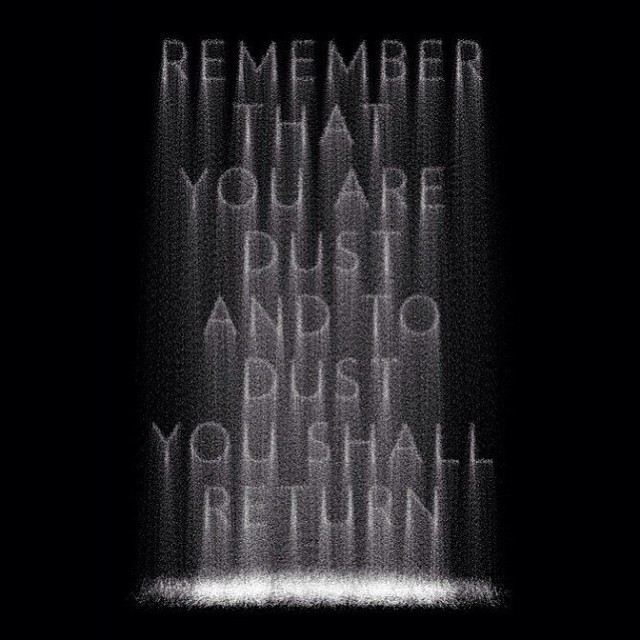
“Remember that you are dust and to dust you shall return” (Genesis 3:19).
i’m starting to realize that if i’m being honest with myself, i was never truly taught anything about christianity as a child. i got the sunday school “jesus loves you! instead of teaching you about the gospels (y’know, the main part of our religion), we’re gonna do a word search about the animals on noah’s ark, because we want you to have fun!” i mean, yeah, i learned things, but even in “adult” services, it was watered down and to be honest, kind of unimpressive. i only believed because i was supposed to, and it took stepping away for a year or two to actually understand anything.
A late night interpretation of Jesus’ thoughts about rich people by Sensitive Mark.
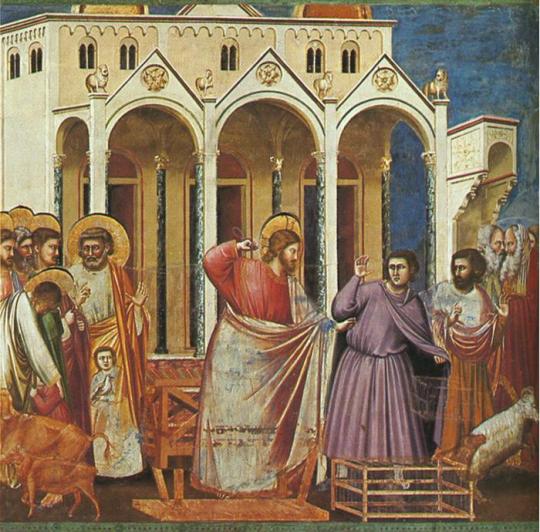
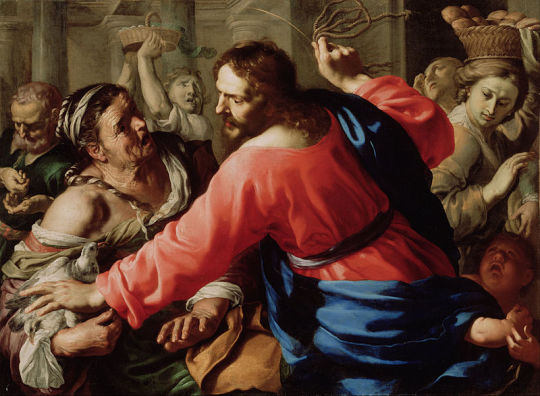
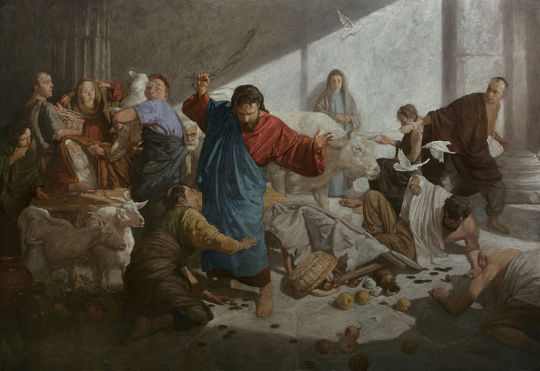
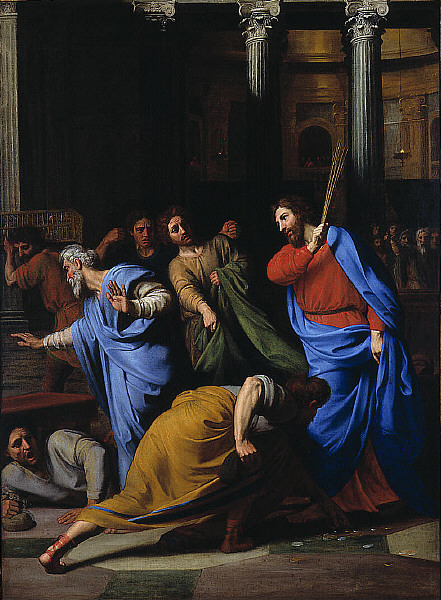
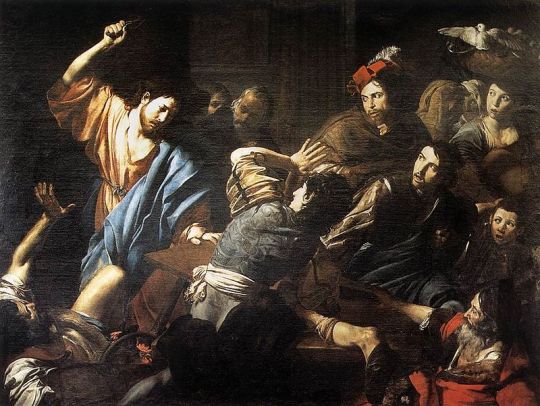
While we’re at it, don’t forget that one time that Jesus saw predatory lending practices going down in the temple and he actually got violent.
Yes. Jesus got violent. Over predatory lending practices.
Throwing tables and threatening people with a whip. Jesus was super pissed.
And that part is consistent across all four of the Gospels. Mathew, Mark, Luke, and John vary in a lot of places, but they’re consistent on the money changers story.
Also, the paintings that this inspired are pretty rad.
99% of the time, Jesus was all “love thy neighbor” and “turn the other cheek” and “if someone asks you to walk a mile with them, walk two,” but where usury was concerned, he’d straight up kick your ass.
Jesus: “Be chill. We should all be chill. But also don’t lend money to people and charge them ridiculously high interest rates. Don’t do that. Especially not when people borrow money for the purpose of doing the right thing and making themselves better people. I really fucking hate that. Seriously, just don’t.”
*smashcut to 2016*
Me, living in a society that is intrinsically founded upon Christian doctrine and beliefs: “Student loan debt and credit card interest rates, am I right?”
Lent in 2017 will start on Wednesday, the 1st of March and will continue for 46 days until Saturday, the 15th of April.
if you’re not familiar with Lent: Lent begins with Ash Wednesday and ends with Easter Sunday.
This time period represents the time Jesus spent in the wilderness, enduring the temptation of Satan and preparing to begin his ministry.
People who participate in Lent do so to grow closer to God.
So, how do you do Lent? There are many individual ways to focus on building a closer relationship with God but what people commonly do during Lent is:
– Give up on something
– Pray more
– Give to others
You can do one of those things or combine two or all three.
Giving up on something reminds you of what Jesus had to endure. It may also make you realize how blessed you are (We are often not grateful for things until we lose them!). Additionally, it may help you live healthier (for example if you give up smoking) and honor the body God gave you. Or help you become a better person (giving up on talking badly about others, for example)!
Praying more will strengthen your relationship to God. Again, you honor Jesus with doing this as He also spent those days praying intensely! You may want to add a regular prayer you do once a day (Start each day with a prayer, for example) or pray during a certain activity (If you take a walk in nature regularly, use this quiet time to pray). Or you may like to read a page of the bible each day or listen to Christian music each day on the way to work.
Giving to others is a very Christian thing to do and Lent is a excellent reminder to do so! You’ll grow closer to God by sharing your blessings and love with others. And again: You honor Jesus who also helped others! Some ideas: Buy a homeless person something to drink or eat while on the way to work. Volunteer in a soup kitchen or animal shelter. Send a sweet text to a friend, family member or co-worker each day (choose a different person each day). Donate diapers or toys to a maternity home. Do a random act of kindness each day.
I’ve never participated in Lent before. Growing up Southern Baptist I never knew what it actually was. I think I’m gonna do it this year.
RADICAL LOVE a millennial gospel mix for punk-rock prophets and their rough-around the edges devotees. For raging against the powers that be, raising up your brothers and sisters, and just barely getting by on guts, faith, and the courage to be kind. For a radical, irresistible love burning inside you, begging to be enacted in the world. listen.
i. Burn This House Down//Tedashii: For James and John, sons of Zebedee, sons of thunder, respective social media publicity agent and angel-hounded scribe of The Cause.
ii. Counting Stars//One Republic: For Mary Magdalene, anointed by Allah and committed to reconciliation between classes, genders, and creeds.
iii. Land of Confusion//Disturbed: For Andrew and Phillip, the rabble-rousing boots on the ground responsible for too many rallies and protests to count.
iv. Baptism//Crystal Castles: For John the Georgia baptist, God-touched and wild-eyed, always ready to lay on hands and defend his prophet baby cousin.
v. Church Clap// KB feat. Lecrae: For Peter, the passionate, fast-talking, fallible cornerstone of the neo-gospel movement.
vi. Dignity//New Polotics: For Jude, hyped up on social injustice, armed with compassion, and out to salvage the environment’s dim future .
vii. Jesus Walks//Kanye West: For Bartholemew, the penniless transient at the heart of the movement, reminding everyone what sacrifice, humility, and Christian love looks like.
viii. Famous Last Words//My Chemical Romance: For Judas Iscariot, armed resistance advocate, left hand of Christ, and anarchist extraordinaire.
ix. Bring Us Home//Michael Tait, Bianca Callahan, and Lecrae: For Simon, halfway through Rabbinical school, flush with passion for preserving Jewish history, and inexplicably in love with the words of Mary’s wayward son.
x. Afterlife//Switchfoot: For Thomas, educated, world weary, and blessed with discernment, with the ability to sort out the solid truth from all the hype.
xi. Cant Hold Us//Macklemore feat. Ray Dalton:For Matthew, the high-rolling heir to a corporate empire betting all his money and resources on Yeshua and happy to lose it all for the good of the Kingdom.
xii. Fire in the Kitchen// Manafest: For James, kid brother of the Christ, dropout, petty criminal, and prodigal son.
xiii. What Would You Do// Bastille: For the boy with constellations in his eyes, a backpack full of bread and fish for the homeless, a redeeming word for the call girl on the corner, and a fiery anger against the big business demons and churched hypocrites of this word. For Yeshua, the carpenter’s son, light and truth bottled up in a slow-smiling, soft-spoken flesh-and-bone body.









 bennu rising