
jews: Kabbalah involves jewish mysticism and texts so complex + specialized only jews well-versed in jewish scholarship to even begin to understand. Others shouldn’t study it.
gentiles in medieval europe: WHY R U KEEPING THIS SECRET?? MUST BE DEVIL WORSHIPPING MAGIC!!
gentiles a few centuries later: lets make a term called “cabal” for secret evil political groups based on the word kabbalah! cant trust those jews!
gentiles during the enlightenment: this kabbalah stuff sounds cool! what if we changed this shit up for christians to use? lets do some alchemy shit this is rad
gentiles today: *starts kabbalah ~religion~ as a celebrity trend* *appropriates kabbalah for ~occult~ cool points in the media and tarot* *profits off of books on faux kabbalah bs to the point jews have trouble finding legit sources on kabbalah*
jews: …
Freemasons: we’re gonna repackage some of this kabbalah with a hodgepodge of ethical maxims and architectural engineering metaphors and market it as The Wisdom of Solomon™. FOR BOYS ONLY NO GIRLS ALLOWED.
Gardner and Valiente: I’m going to repackage Freemasonry with traditional witchcraft and Romantic poetry and call it Wicca™.
Gardner: …And no old chicks.
Valiente: !?
Modern Pagans: At last we have completely liberated ourselves from teh Judeo-Chrsistian Paradigm™. Also you literally cannot understand these fabricated ideas of ancient polytheistic religions unless you understand kabbalah. Also cultural appropriation is horrible.
Jews: …do you even listen to what you are saying????
Reblogging again for the perfect addition
(While also noting that Wicca drew mostly I think from the Order of the Golden Dawn, which still uses a lot of Kabbalah)
Book recs about Christian mysticism? I tried a tag search but may have been using the wrong terms. Apologies if you’ve answered this; you can always just point me toward links. Thanks!
Hey! No worries, I don’t think I’ve tagged my favorites! These books range from classic theological texts to poetry to some good old woo-woo, but I would categorize them all as texts that view Christianity through a mystical lens. I won’t be able to list all my faves here, so I suggest that you check out the list of books on my Goodreads spirituality shelf for further deep-cut recommendations. We can follow each other and become book buddies <3.
My favorite book on this topic is also my favorite book about the mystery of the Trinity, which is The Divine Dance by Richard Rohr with Mike Morrell. You can read more thoughts on this book over on my website, where I reviewed it last winter. If you only invite one book into your life to help you clean spiritual house and connect more fully to the Trinity’s eternal dance of creation and mutuality, let it be this one.
The Practice of the Presence of God is a slim little book written by a monk named Brother Lawrence about how he remained tapped-in to the presence of God in the mundane, and its still one of the best books on Christian mindfulness out there. If you want to go deeper into the Ignatian tradition of contemplation, imaginative meditation, and soul-communion with God, I suggest starting with James O’Brien’s incredibly accessible and effective The Ignatian Adventure: Experiencing the Spiritual Exercises of St. Ignatius in Daily Life.
I also enjoyed Tantric Jesus by James Hughes Reho.
The book seeks to uncover the mystical, body-positive roots of early Christianity and bring them into conversation with the ancient tradition of tantric yoga. You can learn more from the review I wrote on my website. As usual, read with a grain of salt and don’t go around calling yourself a tantic yogi after one meditation class, but Reho is a smart guy and dedicated practitioner who’s done his research.
Christian Wiman knocks vulnerable, agnostic-yearning-for-God poetry out of the park with My Bright Abyss: Meditation of a Modern Believer, written as he navigated love, cancer, and professorship as a reluctant yet besotted believer.
I would be remiss not to give the Feminine Divine her due and so I recommend
She Who Is by Elizabeth Johnson is the ONLY defense of the feminine face of God you will ever need, and it is so orthodox yet poetic, so well-researched yet soulful, that it will tap you into new wavelengths of God that have been present in your life for years, guiding and teaching you unseen and unthanked. Johnson is a theology professor at Fordham in New York and also a modern saint.
Lastly, The Witch in Every Woman by Laurie Cabot is a down-to-earth, conversational book about getting in touch with archetypal feminine power, featuring folktales and exercises to support your journey. Some of the goddess work Cabot describes won’t be applicable to monotheist Christians, and it’s the only book on this list that may be of more interest to girl-aligned folks than others, but by and large it’s a good jumping-off point if you’re interested in getting more in touch with the archetypes and rituals that give meaning to our lives.
Happy reading!
i’m not sure that i’ve ever been truly angry at christianity as a whole, but i am so very bitter at evangelicalism
having some very heretical Mary thoughts tonight
she’s not… meek or sweet. the queen of martyrs is a mother in a blood-soaked battle frenzy
oh definitely. the Magnificat always seems explicitly martial to me. when I first encountered it, it was in the context of its adaptation in the “Canticle of Turning,” and as I was singing it, it was impossible not to be whipped up into this vicious soprano “frenzy”—that’s a perfect word—at the thought of empires toppling and divine retribution
i feel like when people see her obedience, they tend to see it as synonymous with “meek and sweet” feminine submission, and totally overlook the amount of sheer, overwhelming relish she takes in being an agent of God’s will. not only that, but she sees the impact—the punishing, world-shattering impact of a God with no regard for human social schemes—that her role as theotokos will have on the history of the world to come, and delights in it. it’s frightening and beautiful
Oh, Mary is meek all right – but in the way connoted by the Greek term in scripture, which the English fails utterly to convey. In the powerful way, not in the “you’re a woman so we compliment you when you let us walk all over you” way.
My pastor gave a sermon on gentleness/meekness last week, and discussed the Greek word πρᾳΰτης (prautēs). There is no perfect way to translate this word into English, and that’s why translators’ attempts with “meekness” and “gentleness” sound so wishy-washy.
What this word in Greek means is gentle-force, or power with reserve. It’s when someone with power (usually God!) chooses to control that power so as to protect others from it. You can’t have prautēs that is all gentleness and no might.
This webpage puts it this way: “Biblical meekness is not weakness but rather refers to exercising God’s strength under [God’s] control – i.e. demonstrating power without undue harshness.”
Mary demonstrates divine prautēs in everything she does. She has the favor of God but she does not use it to cause harm; she holds God in her womb and then in her arms and she raises him with songs of justice and stories of the crushed overthrowing the powerful.
She nudges Jesus into finally starting his ministry, and throughout it he practices the prautēs he learned from his mother – he may have the power of the entire universe under his control, but he remembers to cradle children gently, not to play to roughly with them; to rein in his frustration with his disciples so as not to crush him under his wrath; to be gentle and hold his power in reserve up until the time comes to shout no! people are suffering! and to overturn tables and wield whips against the corrupt.
Her canticle of praise does indeed reveal the relish @grunge-nun so poetically describes Mary feeling over her role as God-bearer. She foresees a world turned upside down by her newly-conceived child, where the mighty are scattered and the rich stripped of their treasures. This is a woman who loved justice as deeply as she loved mercy, and it pains me that even those who revere her (myself included) too often forget that.
ONE MORE TIME FOR THE PEOPLE IN THE BACK!!!!!!
My soul magnifies the Holy One,
and my spirit rejoices in God my Savior,
for She has looked with favor on the lowliness of Her servant.
Surely, from now on all generations will call me blessed;
for the Mighty One has done great things for me,
and holy is Her name.
Her mercy is for those who fear Her
from generation to generation.
She has shown strength with Her arm;
She has scattered the proud in the thoughts of their hearts.
She has brought down the powerful from their thrones,
and lifted up the lowly;
She has filled the hungry with good things,
and sent the rich away empty.
Mary’s Song of Praise, Luke 1:46-53 (via congregamus)
Christian and Catholic witch offerings and spells tip:
Add salt to your offerings to God or keep some salt on your altar and integrate it in your craft!
Salt represents Wisdom/Sophia and the Holy Spirit (Colossians 4:5.) (Gospel of Philip 107.61;35.)
Salt is extremely important when making offerings and was used often biblically for offering and sacrifices (Leviticus 2:13), (Gospel of Philip 107.61;35.) (Colossians 4:5-6)(Ezra 6:9) (Ezekiel 43:24)
Salt represents God in us as Christians on earth and It represents the Covenants of love between God’s people (Numbers 18:19) (Matthew 5:13)
Salt is also used for protection and purification from God (2Kings 2:19)(Exodus 30:35) (Mark 9:49) (Judges 9:45)
Remember to always pray before your spells or offerings and after!
Don’t forget to not be holding any grudges against your brothers and sisters in Christ or it might affect your work! Matthew 5:23-24 ❤️
“Jesus Christ is my chief Druid”: meet the Anglican Priest who is also a pagan
To be honest, besides practicing magic (depending on what he means by “magic”–he could very well just mean harnessing the natural properties of plants and stones and the like), I can’t really see what’s wrong with this. He isn’t regarding natural elements or fairies as gods or equal to God.
Intriguing.
“Jesus Christ is my chief Druid”: meet the Anglican Priest who is also a pagan
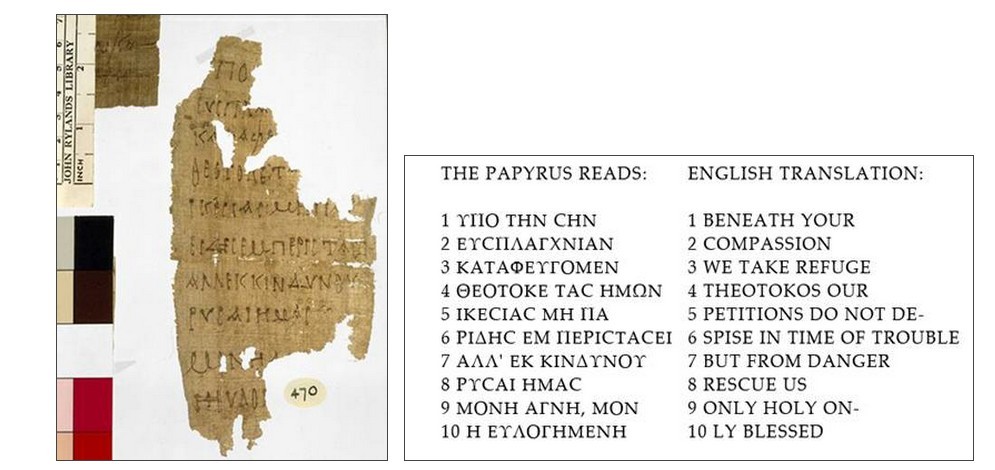
The earliest known prayer to the Theotokos
The early date of this prayer is important for a number of reasons, one of which is that it supports our understanding that the termTheotokos was not just a theological concept defended at the Third Ecumenical Council in AD 431, but was already in popular use and well-known several centuries before the Nestorian heresy. As St. Gregory of Nazianzus stated in AD 379, “If someone does not uphold that the holy Mary is Theotokos, he is separated from divinity.” (Letter 101, PG 37, 177C) Early Christians recognized the Theotokos as a powerful intercessor for those who are suffering and in need of protection. Christians have been seeking her intercessions from the time of the ancient Church and well over a thousand years up to this very day.

 bennu rising