“…people like Jesus and Paul were not executed for saying, “Love one another.” They were killed because their understanding of love meant more than being compassionate towards individuals, although it did include that. It also meant standing against the domination systems that rule their world, and collaborating with the Spirit in the creation of a new way of life that stood in contrast to the normalcy of the wisdom of this world. Love and justice go together. Justice without love can be brutal and love without justice can be banal. Love is the heart of justice and justice is the social form of love.”
— Marcus J. Borg and John Dominic Crossan, The First Paul: Reclaiming the Radical Visionary Behind the Church’s Conservative Icon (p.205)
i’ve been wandering through websites about how icons are made and how to pray with them; here are some quotes i’ve found that i’d like to gather into one place for future reference.
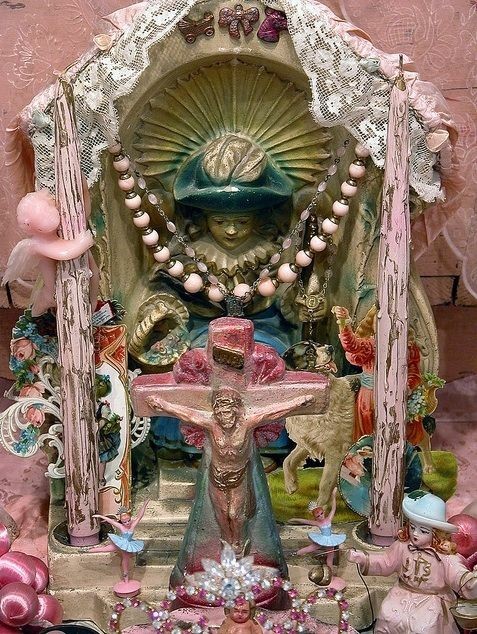
icons are primarily created by members of Eastern Christianity (the Orthodox Church), but Catholics value them too. i’ve always loved them.
“In the eighth century, when the emperor of Constantinople outlawed
icons and initiated a 55-year wave of destruction of sacred images in
the East, many iconographers fled to Italy for safety and continued
their work under the pope’s protection.Fashion can destroy even more thoroughly than imperial edicts.
Through never banned in the West, icons gradually fell out of favor
during the Renaissance. Increasingly religious paintings moved toward
natural lighting, the illusion of three dimensions, and the ever more
vivid portrayal of emotion—all qualities carefully avoided in
iconography, which aims for silence and stillness. Icons are not
emotionally manipulative. They are less a display of individual talent
than the creation of a zone of prayer using artistic minimalism.
…
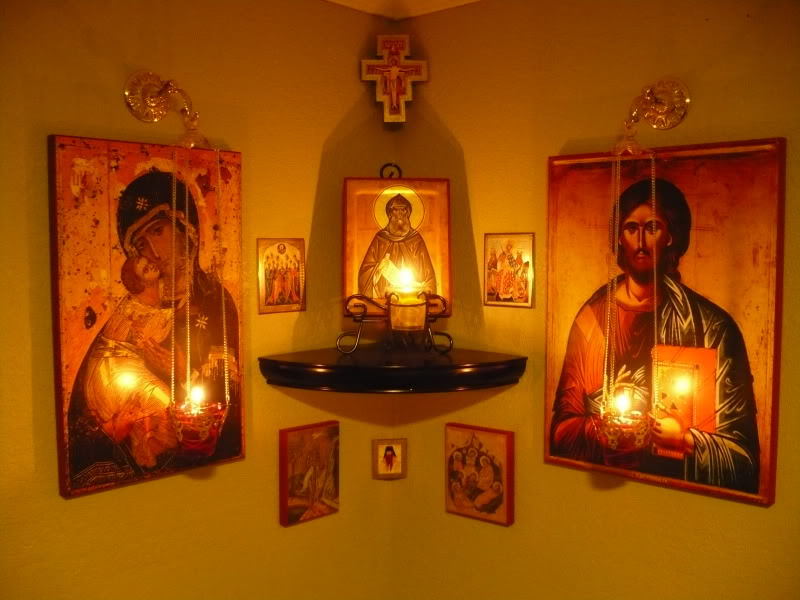
Icons may be beautiful, but they do not exist just to add a little
color or a special atmosphere to the rooms they happen to be in. They’re
there to help us pray. An icon that isn’t being used in prayer is like a
musical instrument not being played or a cookbook that never gives
birth to a meal.”
“Religious icons are a form of prayer. When you look at an icon, it is meant
to make you aware that you are in the presence of God. Icons, then, are not
just art with a religious theme; rather, they are sacred art because they bring
the viewer to the sacred.
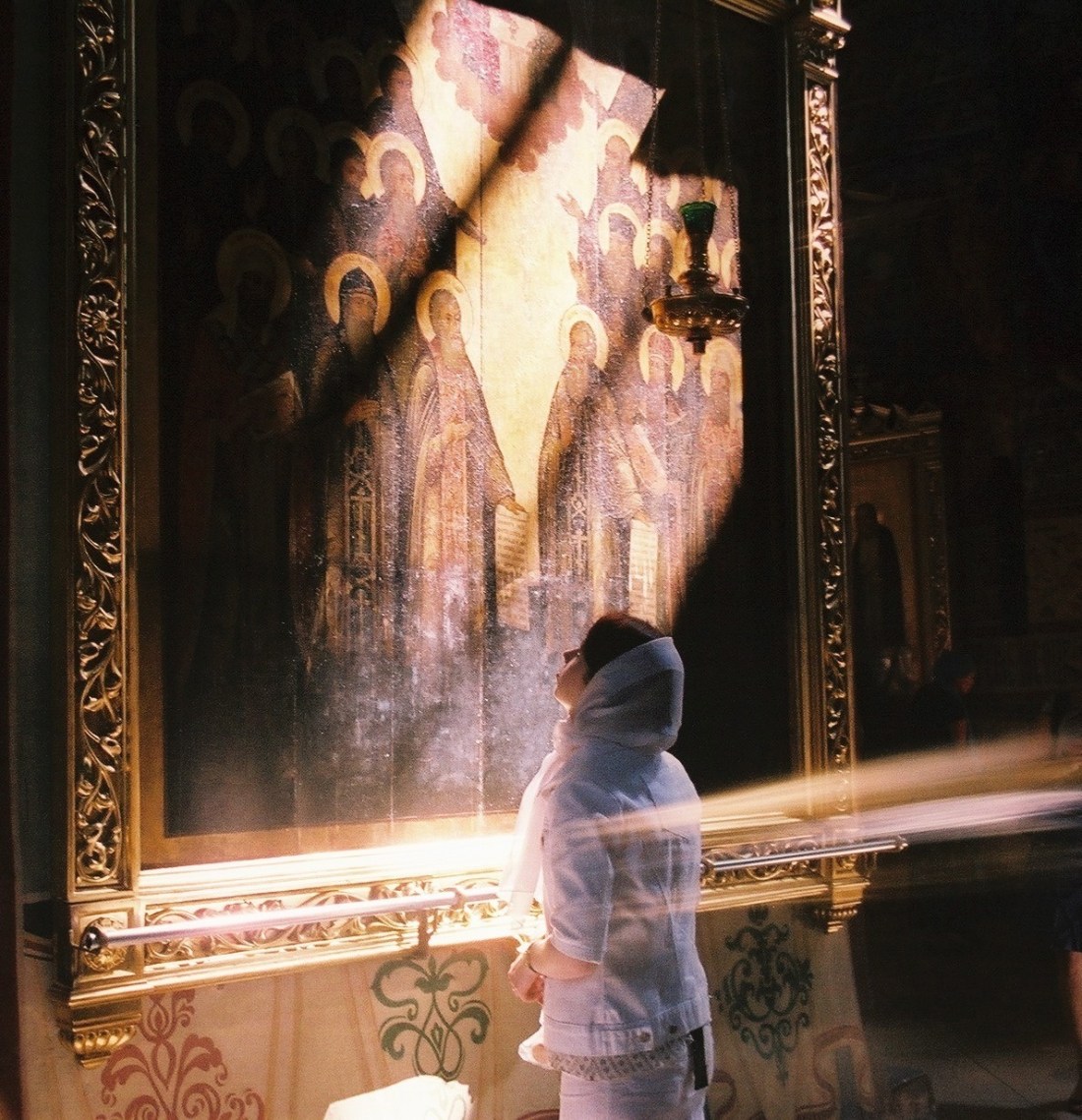
Icons have been called windows to heaven or doorways to the sacred. When you
are standing in front of an icon, it is as if you are looking through a window
into the heavenly world of the mystery. But this is a two-way window. As you
look though the window, you are also being seen with the eyes of love by those
in the icon. It’s like you become a part of the mystery that the icon seeks to
express.”
“One of the odd things that has happened to prayer in much of Western
Christianity — in some churches with the Reformation, in others more
recently — has been the drastic erosion of the physical dimension of
spiritual life. Prayer has become mainly an activity of the head. Many
of us have become like birds trying to fly with one wing. Icons can help
us grow back the missing wing, the physical aspect of prayer.
Do you pray with your eyes closed? Because icons are physical objects,
they serve as invitations to keep our eyes open when we pray. While
prayer may often be, in Thomas Merton’s words, “like a face-to-face
meeting in the dark,” cutting a major link with the physical world by
closing your eyes is not a precondition of prayer. Icons help solve a
very simple problem: If I am to pray with open eyes, what should I be
looking at? It doesn’t have to be icons, but icons are a good and
helpful choice. They serve as bridges to Christ, as links with the
saints, as reminders of pivotal events in the history of salvation.”
How they are made:
“In addition to the style of the painting (or writing as it is called),
the actual technique of making an icon is rich with symbolism. For
example, in the Eastern Church tradition, icons are painted on
high-quality wood that has been carefully shaped and smoothed. The wood
is a reminder of what life was like before the fall of Adam and Eve. It
symbolizes both the Tree of Life and the Tree of Knowledge. A linen
cloth covers the wood, both to protect it and to remind us of the cloth
that Jesus was wrapped in when he died. Coats of gesso made from
rabbit-skin glue and chemists’ chalk are applied over the linen. This
symbolizes the soul and life of the person.
The iconographer cleans, smoothes, and prepares the gesso to receive the
holy image, much as we prepare ourselves to bear the image of Christ.
The board is indented so that the edges appear raised. The center part
of the wood board is shallower than the rest and is called covcheg,
which is Russian for “coffin.” The image is placed inside this shallow
space. It is etched into the gesso. A thin layer of clay bole (a mixture
of clay and hide glue) is applied to the areas of the icon that will be
gilded with gold leaf. The clay represents our physical nature. To
apply gold, the iconographer breathes on the clay bole to vaporize it
and immediately places the gold leaf on the damp area. This process
symbolizes the Spirit and reminds us of the act of creation and the
breath of life. The gold itself symbolizes divine light and heaven.
Icons often have gold backgrounds because the viewer is gazing at
someone in heaven. The image is painted with a mixture of egg yolk, pure
water, vinegar, and natural pigments. Many layers are applied, each
with their own color symbolism.” [x]
“There are indeed canons, or rules, set forward – particularly in
monasteries – as to how someone must approach the painting of an icon.
It involves fasting, prayers,
and other ascetic acts which effectively discipline the passions of the
painter and allow him or her to create the icon in a prayerful
attitude.” [x]
“Because icons make present that which they represent, the way we use
them in prayer is significant. Icons are meant to be gazed upon as you
would gaze upon one whom you love: with openness, expectation, affection
and anticipation. When you gaze upon the one whom you love you do so in
the expectation and anticipation that your loving gaze will be returned
with equal affection. …
First, get comfortable and let your eyes roam over the whole picture.
Simply gaze at the icon in a spirit of openness allowing the icon to
gaze back at you. Gaze in expectation and anticipation knowing that God
has something to say to you through this icon tonight. Gaze at this
icon, allowing your affections to be kindled.
What do you see? What do you notice? What stands out to you? What
questions arise as you gaze at this icon? How do you feel? Don’t try to
figure things out. Simply gaze at love and allow love to gaze back at
you.”
The article continues with a suggestion to focus on each figure in the icon one by one, pondering how experiences you have had match up with the experience of the figure, and waiting to hear if the figure has anything to say to you. Is there a single word that comes to you as you gaze at the icon? Is there anything you want to say to the person(s) depicted?
Unorthodox icons
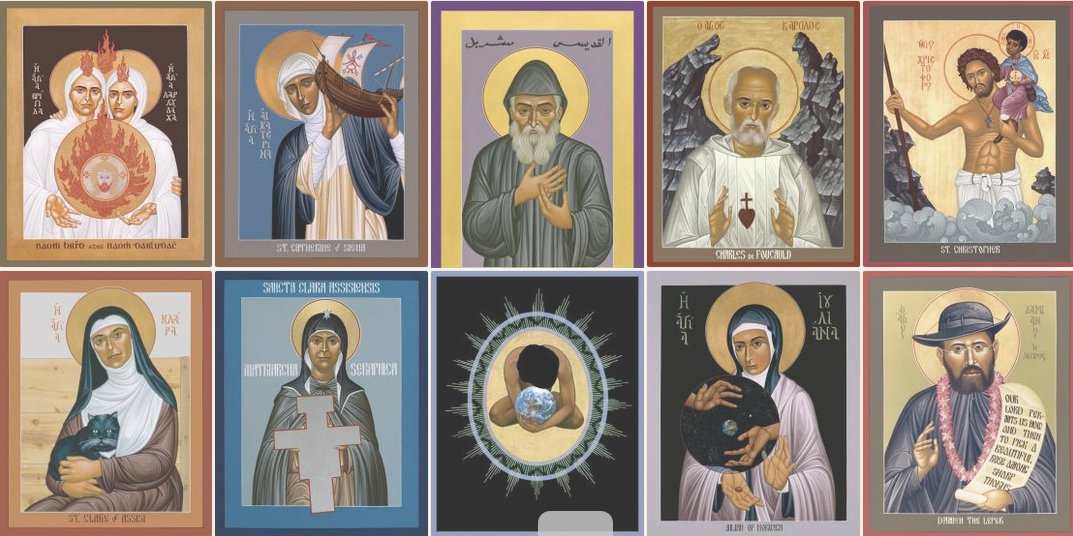
Brother Robert Lentz is my favorite iconographer. He’s a Byzantine Catholic and a Franciscan; he acknowledges that his icons break away from Orthodox tradition and calls them Franciscan instead.
“His icons reflect his experiences among the poor in this country and in
the Third World, as well as his Franciscan and Russian roots. They are
filled with bright colors and often depict contemporary subjects. While
always striving to remain true to the essence of Byzantine iconography,
he adapts traditional conventions in order to minister better to the
emerging Church. His icons remain transcendent expressions of the
ancient Christian Tradition, and they invite us into communion with God
and the saints.” (TrinityStores)
He’s got a website that talks about his history and his sense of calling when it comes to making icons.
“I try to listen to the people of God. The type of people I rub
shoulders with nowadays are not traditional priests or monks but
alienated Christians. They feel that religious institutions have
outlived their usefulness and are scandalized by the ways that they
continue to shackle the Gospel. They’re angry. They’re searching. These
people are the ones I try to listen to. I hear from them about Dorothy
Day and Mother Jones. I heard from them about Archbishop Romero and
other martyrs of Central America. Black people ask, ‘Why can’t we have a
Black Christ?’ And artists wonder why someone like Johann Sebastian
Bach or the artist Georges Rouault isn’t worthy [to be represented as an icon].”
“The original reason I began painting
icons was to celebrate the goodness of God that I saw. There were people I
loved deeply—the Mother of God, St. Seraphim, St. Francis—and I wanted to have
them around me. Painting icons of those people is a celebration of God’s
goodness and artistry. In that sense an icon is like an explosion. It lights up
an entire room. It explodes on your wall. There’s a saint like Dorothy Day
gazing at you! She’s present, and she’s challenging you to look at the streets
and the way you respond to the Gospel. And there’s Oscar Romero asking, ‘What
are you doing about the bloodshed down here?’”
He also has a YouTube channel where he talks a bit more about iconography and has videos talking about specific icons he’s made. I particularly recommend his video titled “Iconography.”
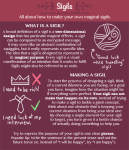
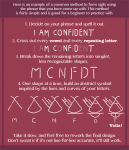
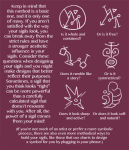
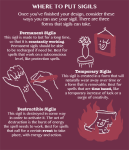
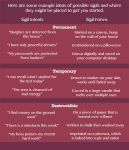
Here’s some advice I had about sigils, a fun and accessible way to make your life more magical! There was a lot I wanted to say so I hope it’s not too wordy.











 bennu rising